

Borrowed Anxiety: When the Book, the Feed, and the News Start Worrying for You
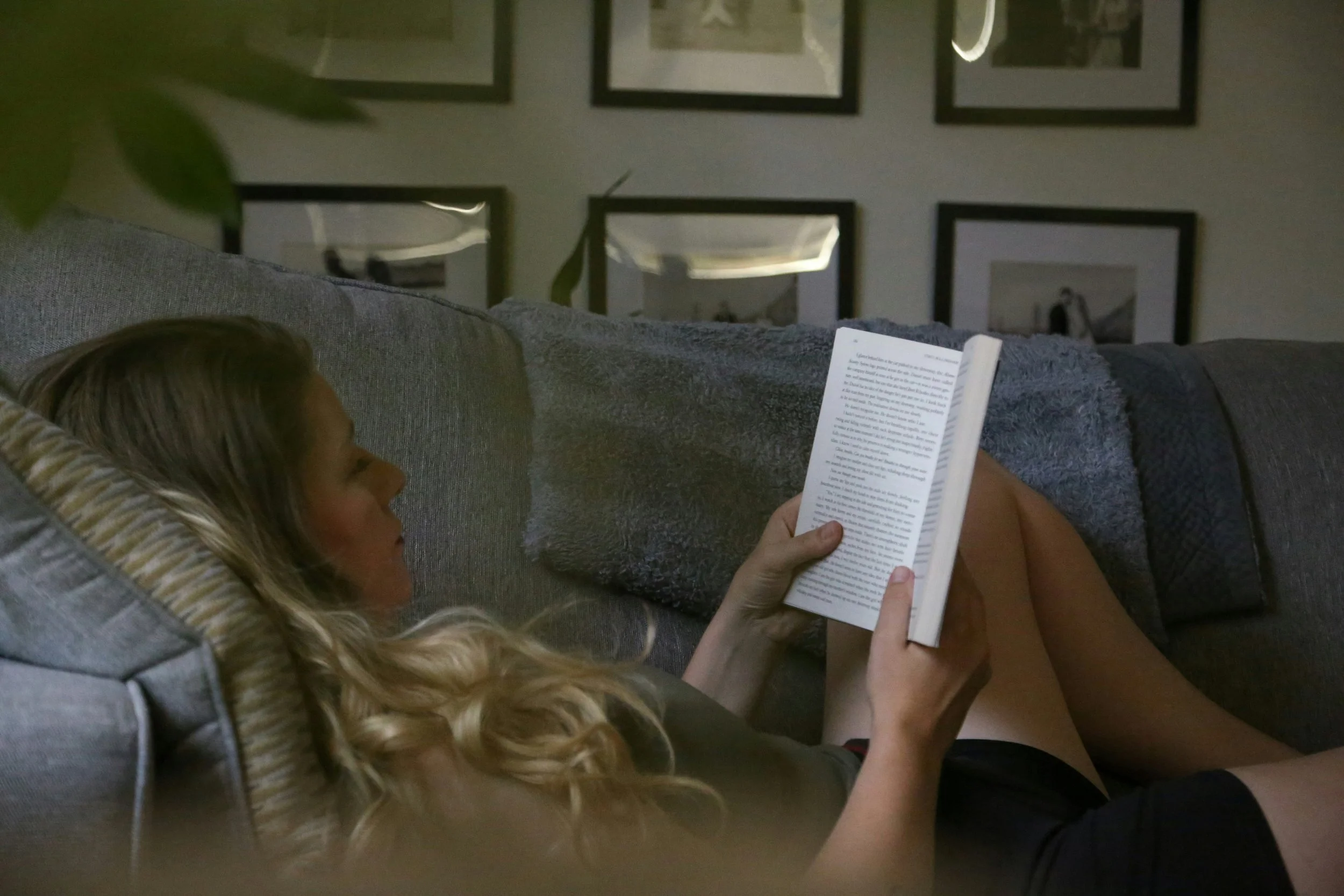
The book had flowers on the cover, a friend had recommended it, and it was on every list, so you started it on a Tuesday night expecting something easy. By chapter twelve it had turned out to be about a pregnant woman in danger, and you were sitting very still on the couch with your heart going, thinking about your own kids asleep down the hall, even though nothing in the story resembled your life.
Books mostly don't come with content warnings. Neither does the thriller everyone is watching, which is about a mother coming apart, or the limited series after it, which is also about a mother coming apart [link: mothers on the brink blog]. The unraveling mother is one of the most dependable plots in publishing and television because it works on nearly everyone, and it works hardest on women who are currently responsible for small people.
For me, it was The Tell. I stayed up all night after the author revealed the trauma that had resurfaced in her life, and I started to fear that something in my own past, something I didn't even know about, was quietly running mine. A monster without a name, somewhere in my depths.
Let's rebrand anxiety for a second
It helps to start with the anxiety you came with, because it has a worse reputation than it deserves. Anxiety is the body's alarm system. It's what gets you out of bed to check the breathing, makes you read the car seat manual, and makes you look twice at the pool gate, and a mother with no fear at all would be a real problem for her children. When a baby arrives the alarm gets more sensitive, and that sensitivity is part of the design. Feeling anxious is uncomfortable, and it is also very often your mind doing its job.
In 2017, researchers in Barcelona scanned women's brains before and after their first pregnancy and found changes so consistent that a computer could tell, from the scans alone, which women had been pregnant. The changes clustered in the regions we use to read other people's needs, and they were still there two years later. Other research has looked at the amygdala, the brain's alarm center, and found that a mother's alarm responds differently to her own baby than to anyone else's. After a baby, the alarm gets louder, and it also gets more specific.
Sources: Hoekzema et al., Nature Neuroscience (2017); Strathearn & Kim, Frontiers in Human Neuroscience (2013)
So most mothers start from a baseline that already includes a fair amount of natural, useful worry, and everything else gets added on top of that.
Everything that gets added
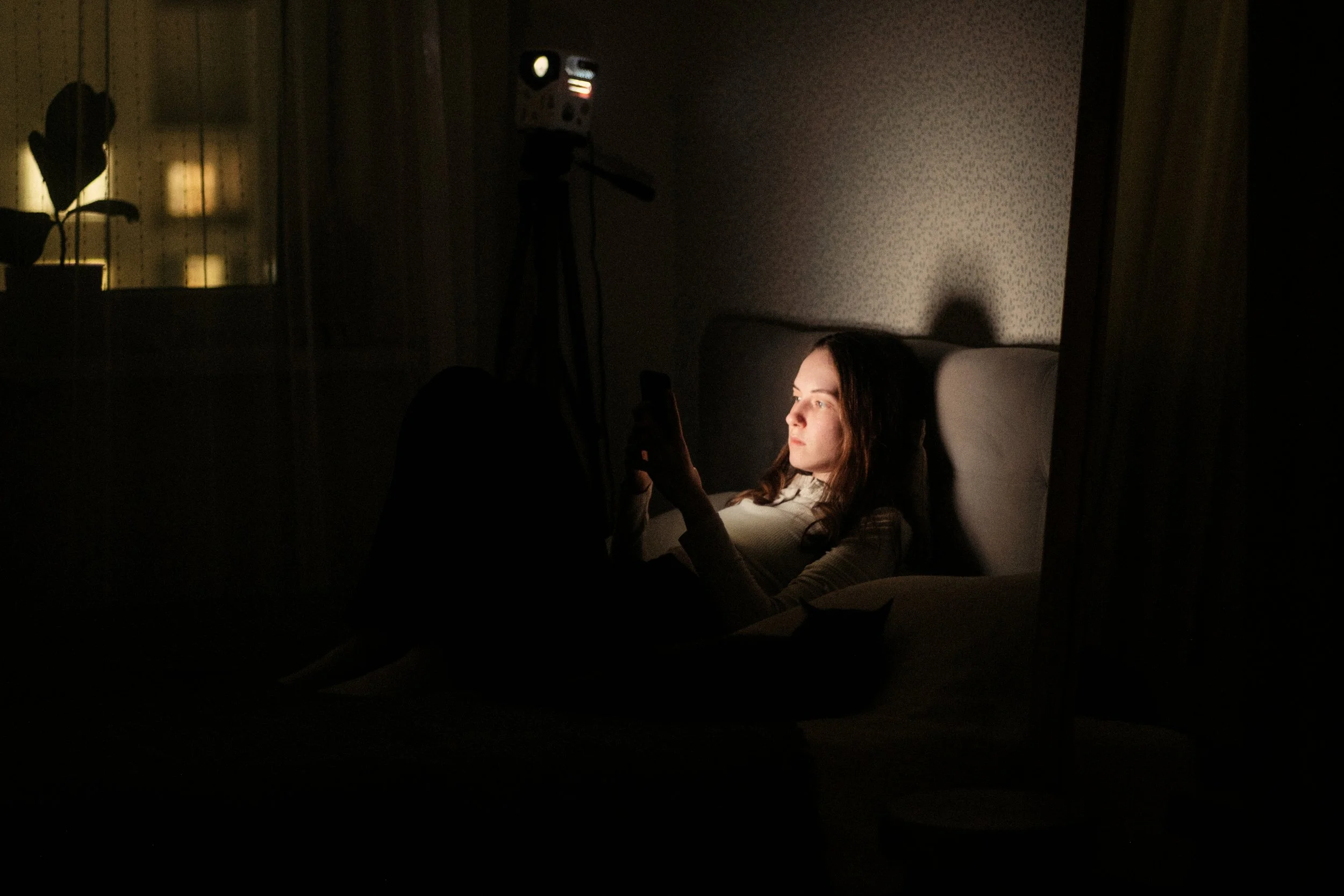
The phone is usually first, with a feed that has learned you're a mother and now serves you choking hazards, rare diagnoses, and a video titled "the one sign I missed." Then there's the news, which reports the worst thing that happened to any family anywhere, and which we talked about on Mamas in Session after a case that left a lot of mothers shaken. There's the group chat forwarding the news, the novel with the flowers, the movie, the podcast you put on while folding laundry that turned out to be about a disappearance, and the well-meaning relative with a story about someone's cousin's baby.
None of these arrive labeled. Each one hands your alarm system something to respond to, and the alarm system, which has never been good at telling a story from a threat, responds. We can call it borrowed anxiety: fear your body processes as real that didn't originate anywhere in your actual life.
Two questions for when something hits
Is this alarm pointing at something in my life? Sometimes the answer is yes. The story about the pool made you realize your gate latch is broken, which is your anxiety working, so you fix the latch. Sometimes the story touches something true in your own history, and the size of your reaction is information about that. And often the honest answer is no, because this is a fictional woman or a family three states away, and nothing about your situation changed between yesterday and today except that you now carry their story.
What state am I in right now? The same chapter lands differently at two in the afternoon than it does at eleven at night, alone, a month postpartum, on four hours of sleep. Dose and timing are part of the decision, and you're allowed to decide that a good book is a good book for a different year.
So do you finish the book?
There's more than one wise answer. You can close it, because nobody is grading your reading. You can keep going because it's good and you've identified the alarm as borrowed, maybe in daylight and maybe not right before bed. Or you can notice that it touched something that was already there and take that to someone, whether that's a friend, a partner, or a therapist. Any of these is a wise choice when you make it after noticing what's happening in you. The unwise version is white-knuckling through three hundred pages, or scrolling for two more hours, because stopping felt like weakness.
The same goes for everything else on the list. Curating your inputs is the same judgment you already use about what your kids watch, turned toward yourself. Mute the account. Skip the series. Ask the group chat to stop forwarding that story. Read the ending on Wikipedia and go to sleep.
When it's more than borrowed
Feeling anxious and having an anxiety disorder are different things, and mothers deserve to know the difference. Generalized anxiety disorder involves excessive worry on most days, for months, that is hard to control and spreads across many areas of life. It usually brings physical symptoms along with it, including restlessness, muscle tension, fatigue, irritability, trouble concentrating, and trouble sleeping even when the baby sleeps. Anxiety during pregnancy and the postpartum period is common, and it is treatable.
If you've trimmed the inputs and the alarm keeps ringing anyway, if worry is running your days, or if you can no longer tell which fears are yours, that's a good time to talk to a therapist. You don't need to wait until it's unbearable, and you don't need to be sure it counts.
The hope is a mother who knows her own alarm well enough to tell when it's ringing for her and when it's ringing for a woman in a novel with flowers on the cover.
Maya Kruger, MA, LCAT, LPC, RDT, PMH-C, CTT3, is the founder and clinical director of Overture Therapy, supporting women through pregnancy, postpartum, and the wider transformation of motherhood in NY, NJ, PA, CT, and DC.