

The Honest Anger of Modern Motherhood: Mom Rage

You just lost it.
Maybe it was the third time you asked your kid to put on their shoes. Maybe it was the bedtime stall, the spilled milk after you'd finally sat down, the partner who walked through the door and asked what was for dinner. Whatever the trigger was, it didn't feel proportional to what came out of you. The volume. The slam. The words that landed somewhere they shouldn't have. Then the kids were buckled in, or asleep, or quiet again, and the shame arrived right on schedule.
If you've been searching things like why do I have mom rage or is mom rage normal, you're not alone. The phrase exists because the experience is common enough to need a name. And the most important thing we can say up front is this: what you're feeling isn't a defect in your character. It's a signal from a system that's been carrying too much for too long.
What mom rage actually is
Mom rage isn't a clinical diagnosis. It's the working term researchers and therapists use for a very specific experience: sudden, intense anger that erupts during the daily work of mothering, often in response to something that seems small on the outside.
In a recent piece for Postpartum Support International, perinatal mental health therapist Nicole McNelis points to emerging research that frames mom rage as something distinct from ordinary anger: intense, repeated outbursts tied to the work of mothering, often with no clear purpose behind them, rooted in feelings of being powerless, treated unfairly, or stretched past capacity. Maternal rage is the umbrella term for this experience at any stage of motherhood. Postpartum rage names the version that shows up in the months after birth, often as a symptom of postpartum depression or anxiety that goes unrecognized because it looks like anger instead of sadness.
Mothers describe it in remarkably similar ways across very different lives. McNelis captures what she hears from her clients: the feeling of "drowning and exploding at the same time."
That image matters. The drowning is the buildup. The exploding is what other people see.
The cycle: buildup, explosion, aftermath
One of the most useful frameworks for recognizing mom rage in your own life comes from McNelis, who maps it as a cycle rather than a single moment. First there is a buildup — pressure that accumulates through stress, frustration, sensory overload, and the wear of doing too much. Then the breaking point arrives, often loud and physical. After that comes the fallout: the regret, the shame, the rehearsing of what you wish you'd done differently.
The buildup is usually invisible, even to the mother experiencing it. It's the night of broken sleep, the mental load of remembering everyone's everything, the touched-out feeling at the end of a long day of small bodies needing yours, the appointment you forgot, the unanswered text from your mother-in-law, the work email waiting on your phone. Each piece on its own is manageable. Stacked, they create pressure that has nowhere to go.
The explosion is what you and everyone else remember. It's also, importantly, not the problem. It's the symptom.
The aftermath is where most mothers get stuck. The shame spiral, the apology to a four-year-old who has already moved on, the late-night scroll through Instagram looking at mothers who seem to have it together. The promise to do better tomorrow. The certainty that something is wrong with you.
Recognizing the cycle is the first step toward interrupting it, and interrupting it almost never starts at the explosion. It starts earlier, with what built up.
What's actually underneath

Research on maternal anger,synthesized in McNelis's PSI piece, keeps surfacing two factors as the central drivers: violated expectations and compromised needs. Both are worth sitting with.
Violated expectations are the gap between the motherhood you imagined and the one you're living. The image of the calm, glowing mother who handles tantrums with grace, who feels grateful all the time, who never resents the work. That image was sold to you long before you became a mother, and every time your real life fails to match it, something cracks.
Compromised needs are the daily, physical, embodied conditions you're operating under. Sleep deprivation. Lack of time alone. Lack of time with adults who see you as a whole person. Lack of help. Lack of food eaten while sitting down. Lack of medical care, lack of community, lack of space for your own thoughts to finish.
Put those together and you have a person being asked to perform an idealized role while being systematically deprived of the resources that role requires. The rage isn't irrational. It's a response to that contradiction.
This is why mom rage cuts across every socioeconomic line. Philosopher and psychology researcher Susi Ferrarello,writing in Psychology Today, points out that the conditions look different at different income levels but produce the same buildup. A mother working multiple jobs with little backup, and a mother running herself ragged inside the demands of "intensive parenting" culture and a high-pressure career, are both carrying caregiving labor that is rarely seen, named, or relieved. Different circumstances, similar result.
Matrescence: the developmental piece almost no one talks about
There's a word for what happens when you become a mother, and most mothers have never heard it. We’ve spoken about this on the blog before, but for those who need a refresher, in 1973, anthropologist Dana Raphael coined the term matrescence to describe the transition into motherhood. The parallel she drew was to adolescence: a profound biopsychosocial transformation that reshapes identity, emotion, hormones, relationships, and body all at once. As Ferrarello points out, the medical world still tends to overlook matrescence as a developmental stage in its own right, treating its harder symptoms as signs that something is wrong with the mother rather than signs that she is in the middle of a major transition.
This matters for mom rage because it reframes what's happening. When a teenager has emotional outbursts during puberty, we don't usually conclude that something is fundamentally broken in them. We understand they're moving through a developmental window where their body, brain, and sense of self are reorganizing. We give them grace, time, and ideally, support.
Mothers do not get the same grace, even though the transformation is at least as intense. Ferrarello describes maternal rage as what surfaces when a mother's whole sense of time gets swallowed by other people's needs and there is no remaining room for her own self to keep developing. The rage shows up when a person in the middle of a massive identity reorganization is given no time or space to do the reorganizing.
One of the most striking observations in Ferrarello's piece is also one of the simplest. The phrase paternal rage is virtually never used. That gap is telling. It points to the fact that mom rage isn't only an internal emotional state — it's a response to the structural reality of who, in most families and most cultures, is still expected to do the everyday work of caregiving.
That isn't a comment on individual partners. It's a comment on the structure most families are operating inside.
When mom rage is a signal of something bigger
Mom rage on its own is common and, in many cases, a normal response to the conditions of caregiving. But it can also be a signal pointing toward something that warrants more attention.
Postpartum rage, in particular, is often a sign of postpartum depression or postpartum anxiety that hasn't been named yet. Anger gets less attention in screening tools than sadness or worry, which means many mothers carrying perinatal mood disorders are missed because their primary symptom looks like irritability rather than tears. If your rage is frequent, lasting longer than a few weeks postpartum, accompanied by intrusive thoughts, or showing up alongside numbness, hopelessness, or a sense of disconnection from yourself or your baby, it's worth talking to a perinatal mental health provider.
Outside the postpartum window, persistent mom rage that's affecting your relationship with your kids, your partner, or yourself is also worth bringing to a therapist. Not because anger is wrong, but because chronic anger that has nowhere safe to go usually means something underneath it needs care.
What helps
There is no single fix for mom rage, and any blog promising you one is selling you something. What helps tends to work on three levels at once: the body, the mind, and the system around you.
Body-level work means tending to the nervous system that's running the show. Sleep when you can get it. Movement. Stepping outside. Long exhales. Physical time-outs before the explosion arrives, not after. None of this is glamorous, and none of it is enough on its own, but a depleted nervous system is far more reactive than a regulated one. Also, to be fair, even some of the “easy” items on this list are hard because being a mother is hard in 2026.
Mind-level work means looking at the stories you're carrying. The "good mother" image you're measuring yourself against. The belief that your worth depends on never raising your voice. The shame that arrives faster than self-compassion ever does. Therapy that takes a parts-based or systemic approach can be especially useful here, because it treats the rage as a part of you doing a job, not as the whole truth of who you are.
System-level work means looking honestly at the conditions you're operating in. Who carries what. Where the mental load actually lives. What support you have, what support you've been told you shouldn't need, and what support is actually available if you ask. This is often the hardest piece, because it requires conversations with partners, family, and sometimes employers. It's also often the piece that creates the most lasting change.
A different frame
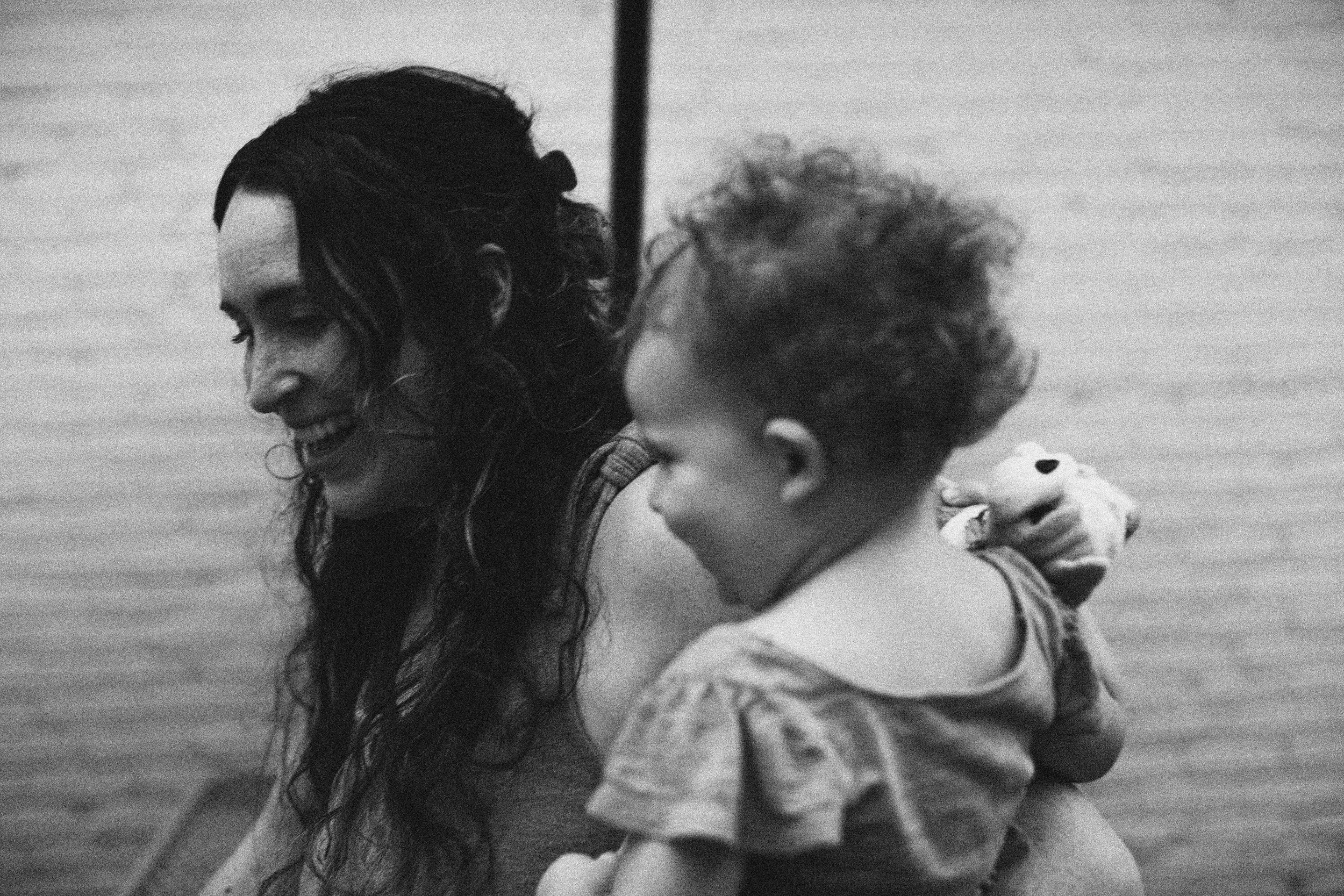
The most important reframe to take from any of this is the one McNelis lands on at the end of her work. Mom rage isn't a sign that you're failing. It's more like an alarm waking you up.
An awakening to what? To the fact that the conditions you're mothering inside are not sustainable. To the fact that you've been carrying invisible weight no one has named. To the fact that the version of yourself who's becoming a mother is also, still, a self that needs tending.
Ferrarello closes her piece with an idea worth carrying: the rage, if you listen to it, is saying something like I am in the middle of becoming someone I haven't fully met yet. I am not the person I used to be. I am not yet the person I am turning into. The space between those two versions of me needs room, support, and time.
If that sentence loosened something in you, that's worth paying attention to.
Further reading
Nicole McNelis, Mom Rage: Causes, Ways to Cope, and Reasons for Hope (Postpartum Support International, 2025)
Susi Ferrarello, Motherhood Is Messy, and Sometimes It Rages (Psychology Today, 2025)
If you're a mother navigating anxiety, rage, identity shifts, or the weight of carrying more than feels possible, you don't have to do this alone or figure it out by Googling at midnight.Overture Therapy supports mothers through the real work of matrescence and the conditions that shape it. We'd be glad to talk.