

When Your Child's Big Feelings Wake Up Yours
There's a reason certain moments feel emotionally bigger than you expected.
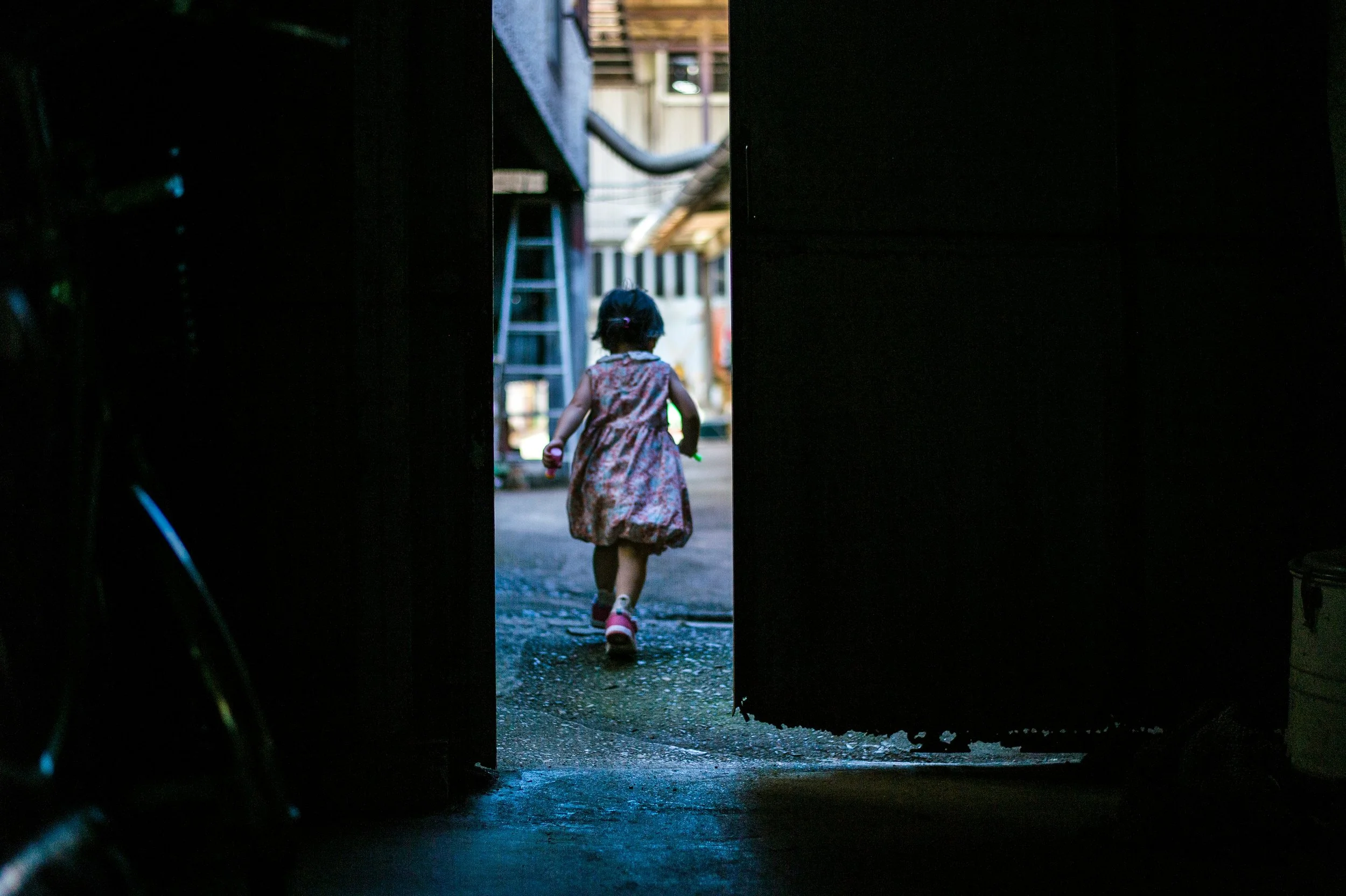
I set my intentions for the day while peeing in a bathroom with a locked door, a rare three minutes of solitude before the audience gathers. I take a deep breath. I tell myself I am a grounded, conscious woman. I am a cycle breaker. I am, by all external measures, a real adult with a semblance of control and a composure that I have spent decades perfecting.
Then, my four-year-old informs me that her toast is cut into the wrong kind of triangles. She looks at me with a level of pure, unadulterated vitriol that suggests I have personally dismantled her entire future.
Suddenly, the composed woman is gone. In her place is a person vibrating with a level of rage that feels dangerous. It is not about the bread. It is the fact that I am standing in my kitchen, having done everything right, and I am being held hostage by a person who cannot yet wipe her own behind. I find myself fighting the urge to scream or, worse, to sit on the floor and weep because I am forty years old and I am still not the one in charge.
The Mirror You Did Not Order
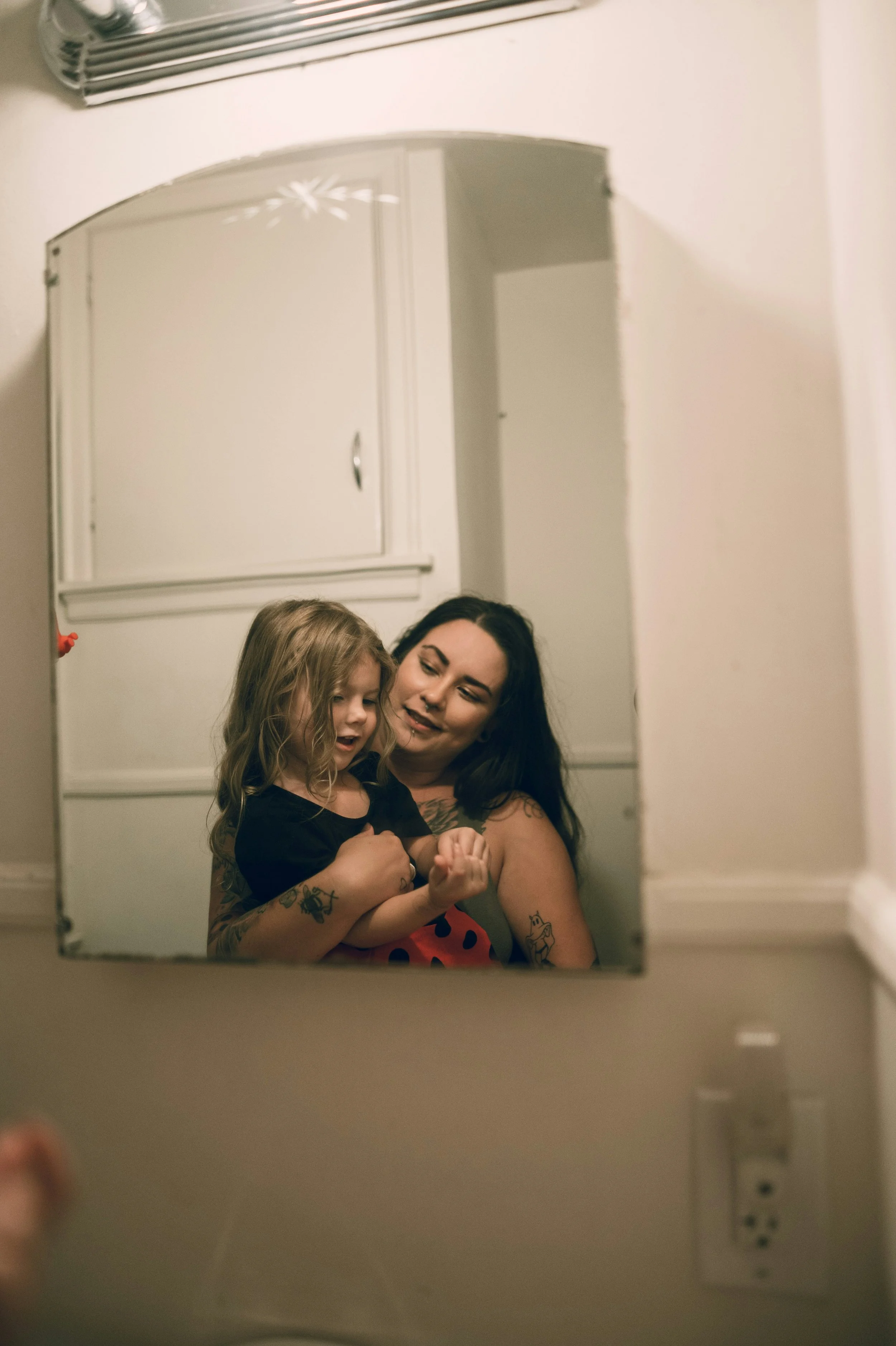
“But children are also mirrors, and they have a habit of reflecting the parts of us we thought we had buried under a graduate degree and a solid skincare routine.”
We spend so much energy trying to be a refined mirror for our children, reflecting back their worth and their potential. But children are also mirrors, and they have a habit of reflecting the parts of us we thought we had buried under a graduate degree and a solid skincare routine.
They are not a soft, filtered mirror. They are often the offensive, fluorescent lighted kind found in a cheap dressing room. They are the mirror that highlights the rogue chin hair you missed and the underground pimple that hurts when you smile too big. They show you the jagged edges of your own patience and the parts of your history you thought you had outrun.
In our work at Overture, we see this constantly. You have built a home where feelings are allowed. You tell your kids it is okay to be angry. You are doing the work your parents did not do. But when your child actually has the audacity to be loud or inconvenient, something in you snaps.
It is not that you are failing. It is that your child is exercising a freedom that was strictly, perhaps even violently, forbidden to you.
In Internal Family Systems, we recognize this as a part that is getting activated. While you are trying to be the calm parent, a younger version of you is standing in your mind, absolutely terrified or incandescent with rage. She is thinking, If I had acted like that, the world would have ended. That heat in your face is the sound of a younger part of you realizing that the house is finally safe enough to be pissed off. She has been waiting decades for her turn to be the problem.
The Cost of Being the Good One
Most of us were the easy ones. We were the high achievers and the peacekeepers. We learned early that love was a transaction. You were loved as long as you were pleasant, predictable, and did not take up too much space. It was a brilliant survival strategy that got us through our early lives, but it is a terrible way to live in a house with a daughter who has opinions.
When your child falls apart, it feels like a personal failure because your oldest job was to make sure nobody ever fell apart.
We often find that the ages that trigger us most are the ages where our own stories got heavy. If the light went out in your house when you were five, your own five year old is going to feel like an emotional minefield. It is an opening, though it feels a lot more like a root canal.
The Adult in the Room
The goal at Overture is not to achieve some fake, quiet composure. It is to help you lead from a place of core Self; the part of you that can look at your own frantic energy and say, I see you. Your body is learning that calm is a safe place to land, even when it is humming with old, frantic energy.
Repair is the only thing that matters. When you lose your mind because of the toast, you have an opportunity to do something your parents likely never did. You get to come back. You get to say, “I felt very small and very angry for a moment, but I am the adult and I am here now.”
Every time you meet your child’s big feelings without shaming them, you are quietly reparenting that little girl who had to be perfect to be safe. You are building a home where every version of you is allowed to exist, even the one that is currently hiding in the pantry.
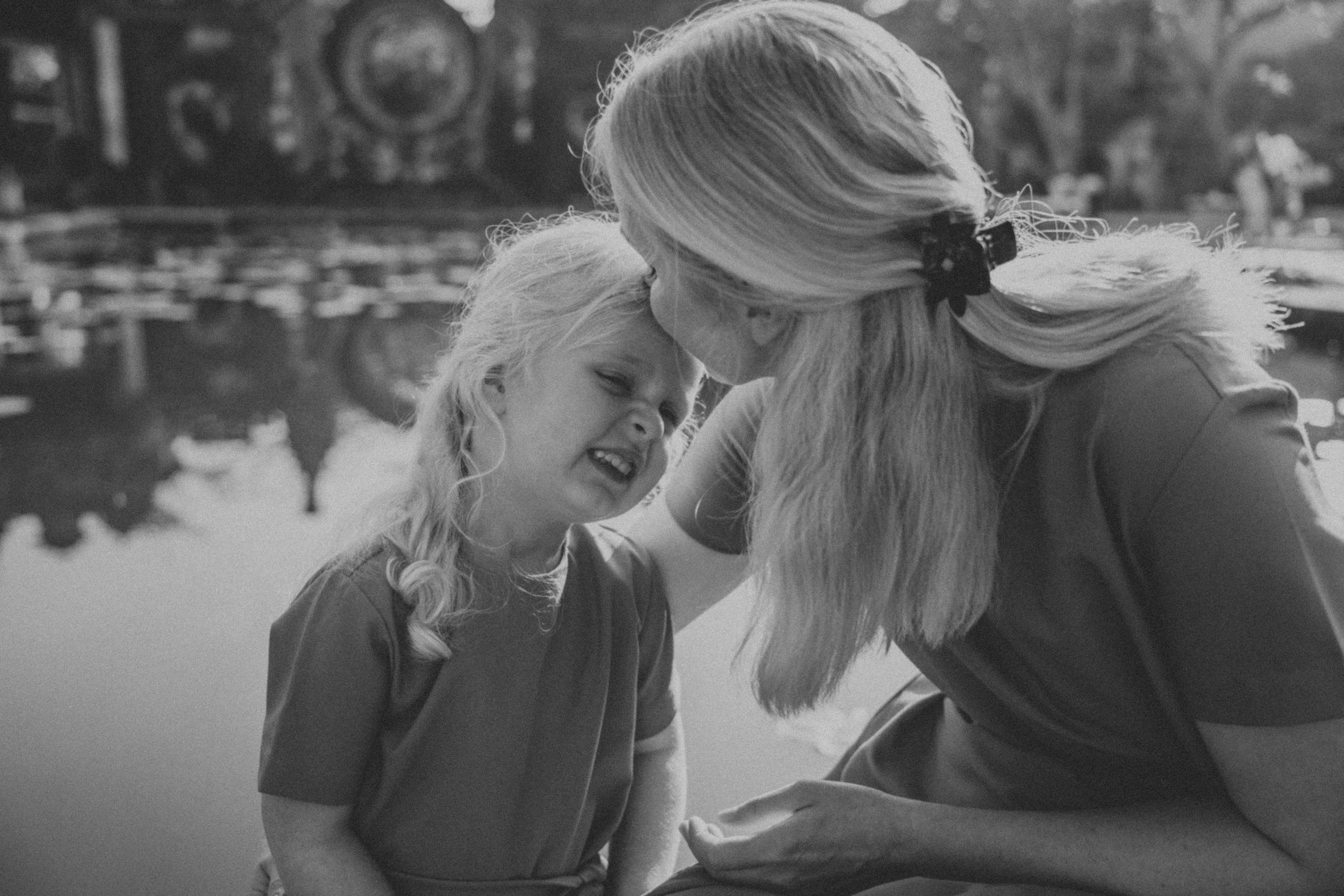
If you suspect your reactions have a history, you are right. You do not have to carry it alone. We explore these narratives at Overture Therapy through various therapeutic modalities, and we talk about the messy reality of these life paths on our podcast, How Did You Get Here?
When you look at your child tomorrow, can you try to see the little girl you once were, standing right there with her, and maybe give her a little more grace than she was ever given?
Curious what's underneath your reactions? Book a consultation with Overture Therapy.
Does that version of your younger self feel like she is finally allowed to be heard?